Liberals’ Summer Blitz Needs a Public Scrutiny Ledger
A majority government can pass laws. It should not turn parliamentary scrutiny into a summer casualty.
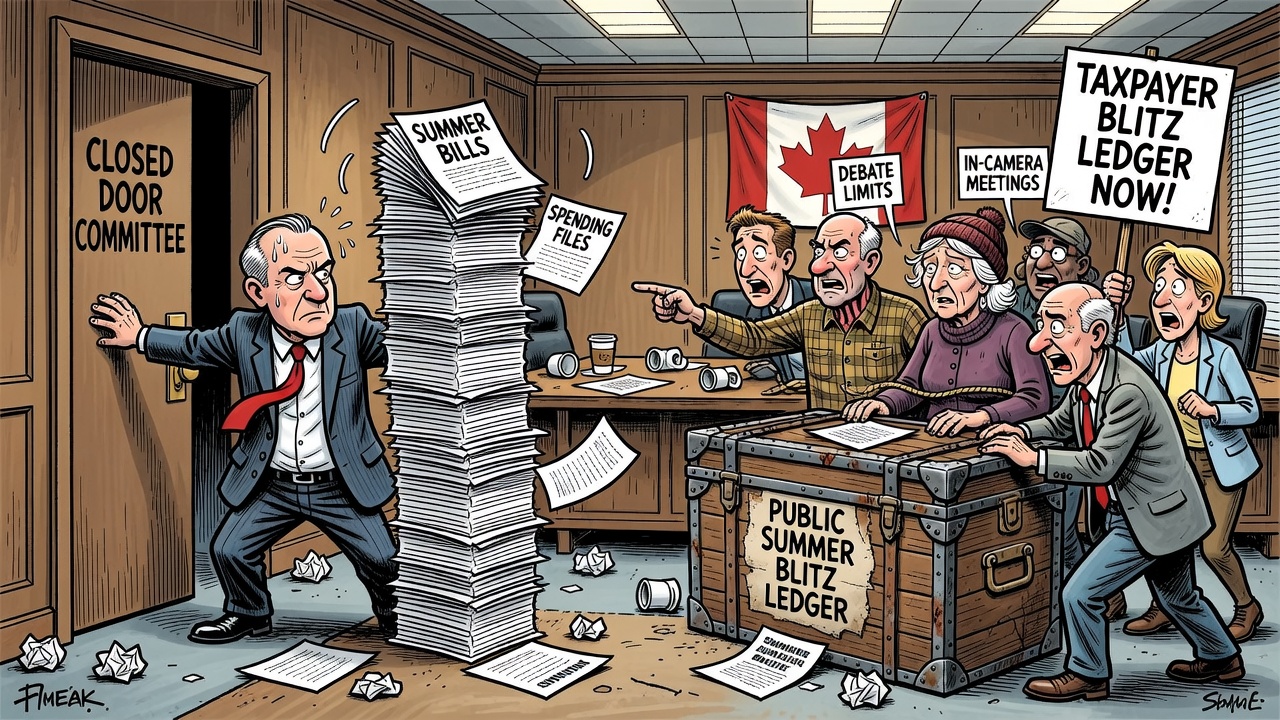
Ottawa’s final sitting weeks before summer should not disappear into a fog of rushed votes and closed committee rooms. Canadian Affairs reported that 18 bills received royal assent in the final two weeks before Parliament rose, while critics warned the Carney Liberals were using their new majority to shorten debate and push controversial legislation through the system.
The point is not that governments must debate forever. Parliament has to function, and opposition parties can use delay tactics too. The conservative accountability test is simpler: when a government compresses debate, forces committee timelines or moves scrutiny behind closed doors, it owes Canadians a public record of exactly what was accelerated, why, and what scrutiny was lost.
That record matters because the rush was not limited to one file. Canadian Affairs reported debate-limiting motions on major legislation, including bills dealing with hate speech, bail reform, domestic violence offences, election interference and the Build Canada Homes agency. It also reported motions used to force bills through committee, including Bill C-30 on pesticides law changes and Bill C-22 on digital communications access.
The committee side is just as important. Global News and The Canadian Press reported in May that, after the Liberals became a majority, Liberal MPs moved several committee meetings in camera and unilaterally adjourned at least one committee. The same report noted why committees matter: they can call witnesses and require documents. When a meeting goes in camera, the cameras are off, transcripts stop, and the public and media are excluded.
That is especially troubling where public money is involved. Canadian Affairs cited concerns that closed-door or shortened proceedings touched spending scrutiny, including the Benefits Delivery Modernization project and a prescription modernization program. If those concerns are wrong or incomplete, the government can prove it by publishing the ledger. If they are right, taxpayers deserve to know which money files were shielded from daylight.
Prime Minister Mark Carney’s government now has the power advantages of majority rule. It should accept the transparency obligations that come with them. A Summer Blitz Ledger would not stop legislation. It would simply let Canadians see the trade-offs: speed versus scrutiny, control versus openness, and political convenience versus accountable lawmaking.
The fix is modest. Before Parliament returns in the fall, publish the list. For each bill and committee meeting, show the motion, the vote, the rationale, the witnesses heard, the witnesses denied, the documents produced, the documents withheld, and the fall plan for follow-up review. If the legislation is strong, it can survive sunlight. If it cannot, Canadians should know before the next blitz.
- Canadian Affairs: Ottawa’s legislative blitz in final weeks draws criticism
- Global News / The Canadian Press: Liberals want committees to be “open,” minister says as Tories cry foul
This article argues for stronger parliamentary transparency. It does not allege that any MP acted unlawfully.