CMHC’s Affordable-Housing Repair Backlog Needs a Public Ledger
CMHC says too much affordable housing is already in fair or poor condition. Before Ottawa announces more programs, publish the repair backlog ledger.
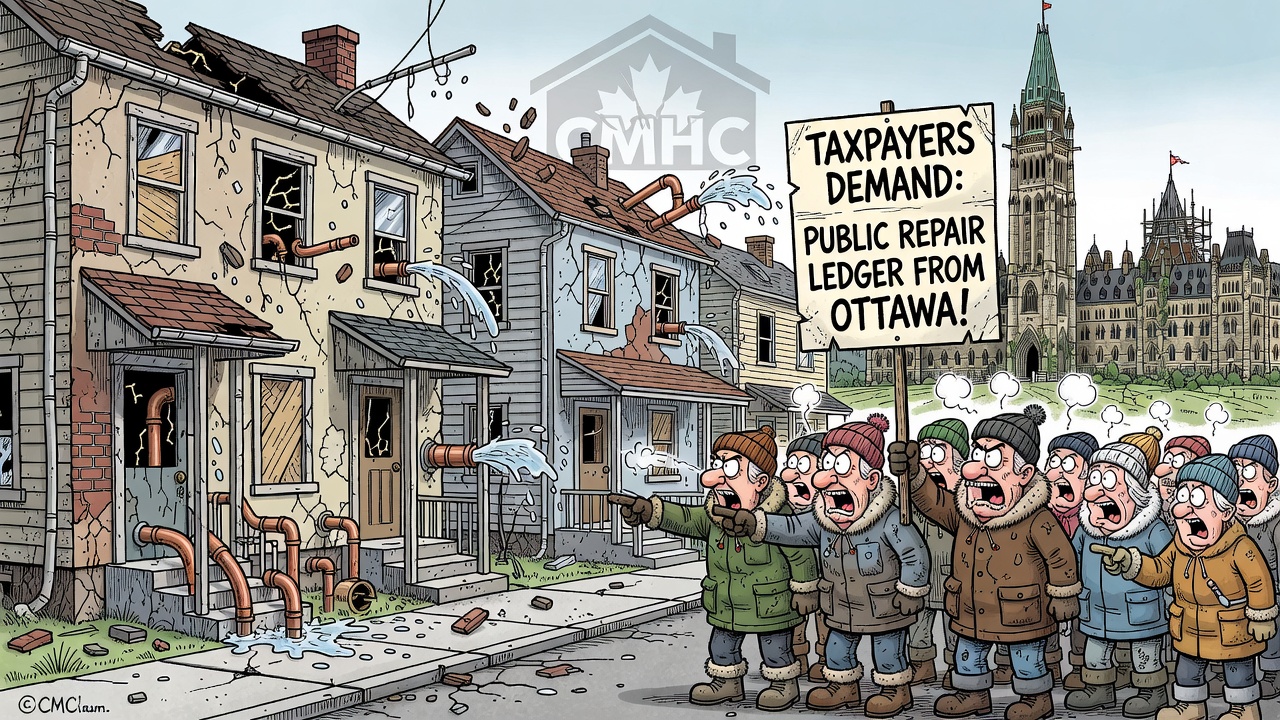
Ottawa’s housing announcements always arrive with ribbon-cutting language. The repair bill for the housing government already subsidizes is less photogenic, which is exactly why it needs to be public.
Blacklock’s Reporter says CMHC reported that a third of affordable housing in Canada is in poor or fair condition, with plumbing, electrical and roofing among the problems needing repair. CMHC’s own Social and Affordable Housing Survey tables point in the same direction: for the 2025 survey cycle, 37.3% of social and affordable rental structures were rated fair or poor, while only 7% were rated excellent.
That matters because governments cannot build credibility by announcing new programs while existing units deteriorate. Every roof leak, unsafe electrical system, plumbing failure or major-envelope repair can quietly remove affordable homes from useful service. A unit that exists on a spreadsheet but cannot be safely occupied is not a housing solution for a family, a senior or a worker priced out of the private market.
The conservative accountability test is simple: before the Carney government asks taxpayers to trust another housing plan, publish the repair backlog ledger. Canadians should be able to see the number of affected units by province, owner type and condition rating; the repair categories; the estimated costs; the safety risks; the vacancy impact; the federal dollars already committed; and the timeline for getting units back to decent condition.
There is also a fairness issue. If Ottawa can find billions for new housing agencies, financing programs, land packages and headline projects, it can show whether basic repairs are being triaged by need or by politics. Non-profit, co-operative, municipal and Indigenous housing providers should not have to navigate a black box while ministers stand in front of cameras promising supply.
No one should pretend every building-condition problem is Ottawa’s fault. Provinces, municipalities, housing authorities and operators all have roles. But CMHC’s data gives the federal government a responsibility to disclose what it knows and what it is funding. If the public purse is involved, the public deserves the maintenance ledger.
The Liberal habit is to treat housing as an announcement machine. The repair backlog is a results test. Publish the list, publish the costs, publish the risks, and show Canadians whether existing affordable homes are being protected before more slogans are sold as supply.
- Blacklock’s Reporter: Third Need Repairs: CMHC
- CMHC: Social and Affordable Housing Survey — rental structures data
- CMHC: Social and Affordable Housing Survey background and prior release
This article argues for disclosure of repair, funding and safety records. It does not allege misconduct by individual housing providers.