Publish Miller’s Social-Cohesion Briefing Memo
If Ottawa is studying another country’s plan to police “social cohesion,” Canadians deserve to see the memo before the slogans become policy.
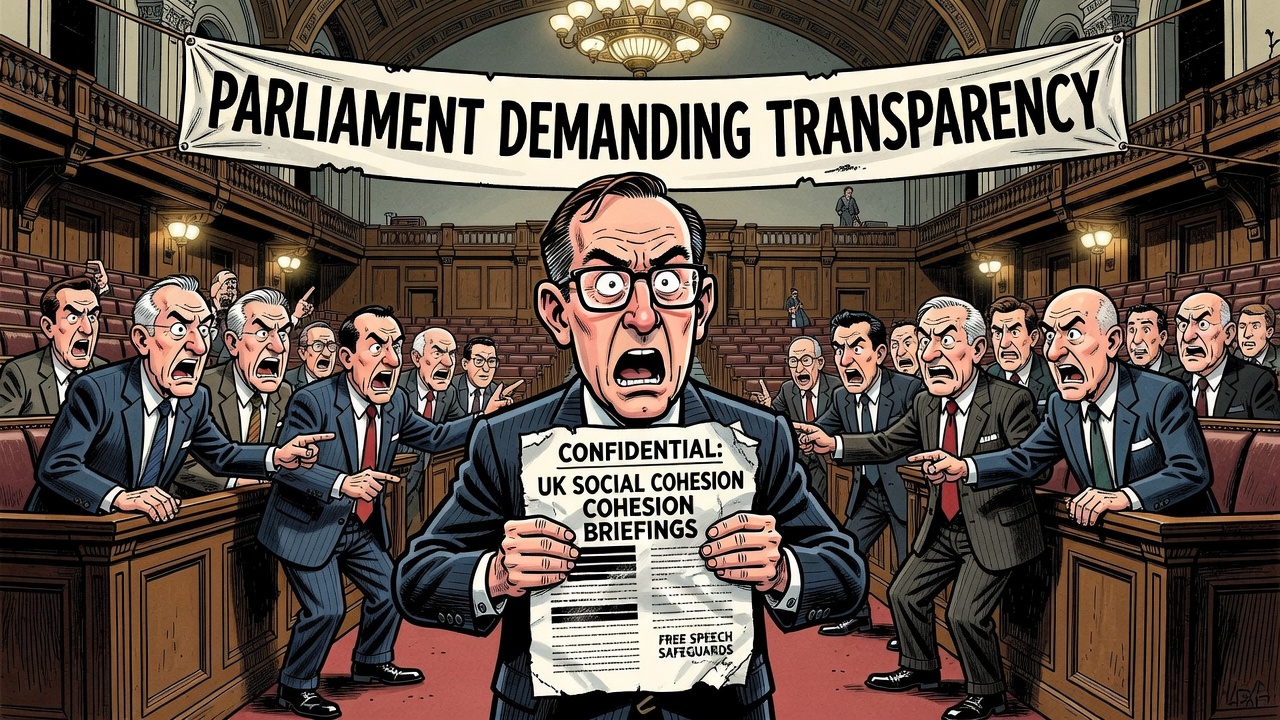
Blacklock’s Reporter says Heritage Minister Marc Miller scheduled confidential briefings during a July trip to the United Kingdom on a Labour Party proposal to promote “social cohesion.” According to Blacklock’s, the information came from an Access To Information memo, and the related Labour language targeted “digital grifters” and “politicians of grievance.” That is enough to justify a simple demand: publish the briefing file.
There is nothing wrong with governments studying how democracies respond to disorder, intimidation, foreign interference or online abuse. The United Kingdom has been debating those questions openly. A recent UK government paper, Protecting What Matters, frames cohesion as a resilience project, including social-media rules for children and standards for mainstream video-on-demand services. Earlier UK work, including the Khan Review, warned about threats to democratic resilience while also acknowledging harassment and censorship concerns.
The problem for Canadians is not the word “cohesion.” The problem is secrecy plus vague labels. When officials quietly study frameworks that name political grievance, online influence and social trust, the public needs to know where community safety ends and speech management begins. Conservatives, libertarians and old-fashioned liberals should agree on this much: unpopular political criticism cannot be laundered into a threat category just because the government dislikes its tone.
Miller’s department should therefore release the agenda, attendees, briefing notes, outside groups consulted and any policy options prepared after the UK meetings. If parts must be redacted for legitimate security or diplomatic reasons, publish the severed version and explain the exemptions. Parliament should also ask whether any Canadian program, grant stream, online-harms proposal or Heritage communications plan is being shaped by the UK material.
The test is straightforward. Did officials examine foreign-interference prevention, anti-violence measures and civic trust tools, or did they examine machinery that could stigmatize lawful opposition as “grievance” politics? Did anyone brief the minister on Charter protections, viewpoint neutrality, journalistic freedom, religious expression and the right to criticize immigration, crime, gender ideology, climate policy or the government itself?
Canadians do not need another soft-focus slogan. They need guardrails in writing: no blacklists, no viewpoint-based funding punishments, no informal pressure on platforms to suppress lawful speech, no imported definitions that treat dissent as disorder, and no confidential policy pipeline around political expression.
If the briefing was benign, release it. If it was not, Canadians should learn that before the next bill, grant program or “social cohesion” strategy appears with the hard questions already buried in a confidential memo.
- Blacklock’s Reporter: Study “Social Cohesion” Plan
- GOV.UK: Protecting What Matters: Towards a more confident, cohesive, and resilient United Kingdom
- GOV.UK: The Khan Review: executive summary, key findings and recommendations
This article relies on published reporting and public UK policy documents. It does not allege that Canadian officials adopted any UK policy; it argues that confidential briefings touching political speech and social-cohesion policy require transparent safeguards.