Cancelled Brookfield AI Meeting Still Needs a Conflict-Screen Receipt
Cancelled is good. Documented is better.
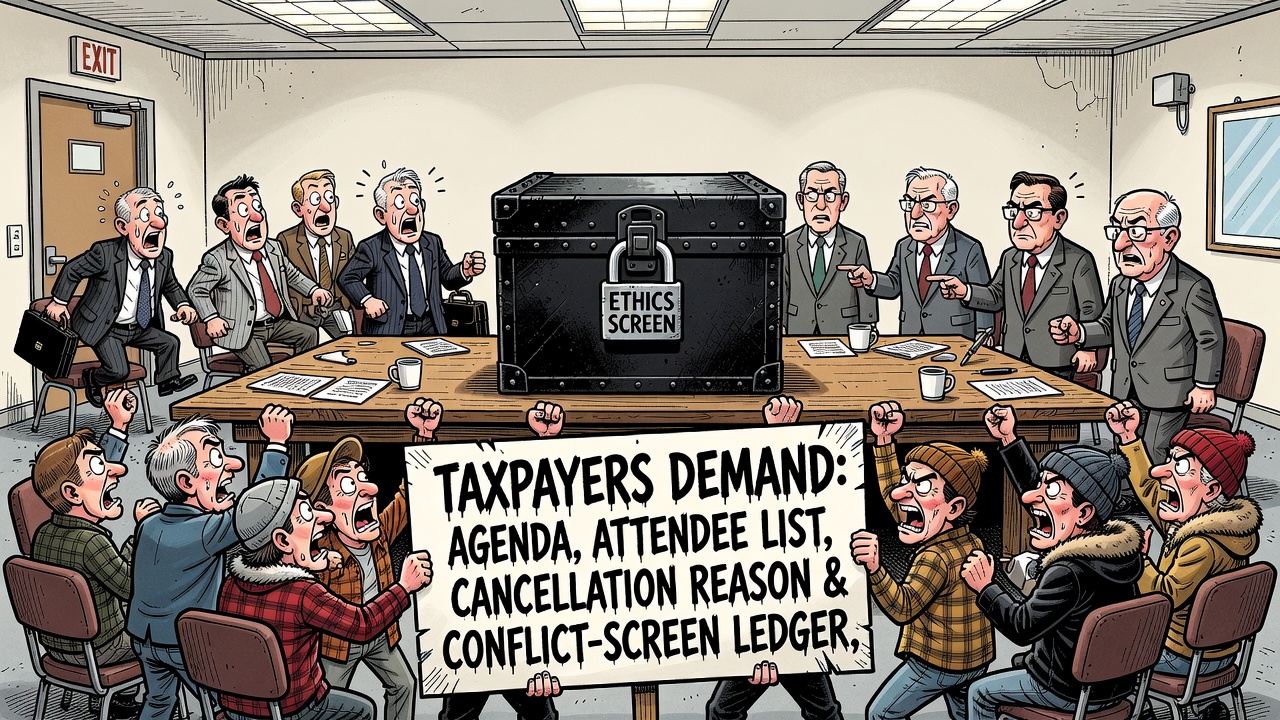
A cancelled meeting can be evidence that a conflict screen worked. It can also become a convenient end of the story. With Prime Minister Mark Carney’s Brookfield history, Canadians should not be asked to guess which one happened.
Juno News reported that a July 2025 meeting between Brookfield executives and Natural Resources Canada officials was set to discuss Brookfield’s AI data-centre ambitions in Canada, then was cancelled and not rescheduled, citing records obtained by the Investigative Journalism Foundation. Juno also reported that Carney was not expected to attend and remained screened from Brookfield matters.
That last point matters. This is not proof of wrongdoing by Carney, Brookfield, or Natural Resources Canada. But it is exactly the kind of file where Ottawa’s ethics architecture has to be visible enough to be trusted. A prime minister who recently worked for a global asset manager should not be allowed to answer every Brookfield-adjacent question with a vague assurance that a screen exists somewhere behind the curtain.
The context is larger than one cancelled calendar item. Ottawa is actively building an AI and energy agenda around data-centre power demand, grid capacity, reliability, storage, affordability and investment. Natural Resources Canada’s G7 Energy and AI Work Plan describes governments working with industry and partners on the infrastructure pressures created by AI. Data centres are not a side issue; they are a policy track with land, electricity, financing and regulatory consequences.
Parliament is already asking the right questions. House of Commons written question Q-1158 pressed the government on Brookfield-linked dealings, including whether the Prime Minister was briefed on meetings, whether screened files involved Westinghouse or Evolugen, and whether some files were treated as “general application” and exempted from the screen. That “general application” category is where accountability can disappear. If a policy helps a whole sector, but one of the best-positioned beneficiaries is a firm tied to the Prime Minister’s former employer and blind-trust interests, Canadians deserve more than a label.
The conservative accountability standard is simple: do not criminalize routine government-industry contact, but do document the firewall. Publish the meeting request, proposed agenda, proposed attendees, cancellation date, cancellation reason, who made the ethics-screen decision, whether the Ethics Commissioner or PMO ethics staff were consulted, and whether any later AI or data-centre policy touched Brookfield-owned, Brookfield-managed, Westinghouse, Evolugen, or related assets.
If the meeting was cancelled because the screen worked, the government should want that record public. If it was cancelled for scheduling or business reasons, say so. If officials concluded the file was “general application,” identify who made that determination and what standard was applied.
Blind trusts and conflict screens are not magic words. They are public-confidence tools. In a government led by a former Brookfield executive, the test is not whether Ottawa can say “screened.” The test is whether Canadians can see enough of the paper trail to believe it.
- Juno News: Carney’s AI push faces fresh scrutiny after secret Brookfield meeting cancelled — August 2026
- Investigative Journalism Foundation: Brookfield execs hoped to discuss data centre investments with federal government
- House of Commons: Written Question Q-1158 on Brookfield-linked government dealings
- Office of the Conflict of Interest and Ethics Commissioner: Public registry search for Mark Carney conflict-screen disclosures
- Natural Resources Canada: G7 Energy and AI Work Plan
This article asks for redacted process records. It does not allege that the cancelled meeting was improper or that Prime Minister Carney personally attended or directed it.