Liberals Missed Their Own National-Security Review Deadline
The Liberals wrote a comprehensive review into the national-security law. Three years after the deadline, Canadians are still waiting for the oversight receipts.
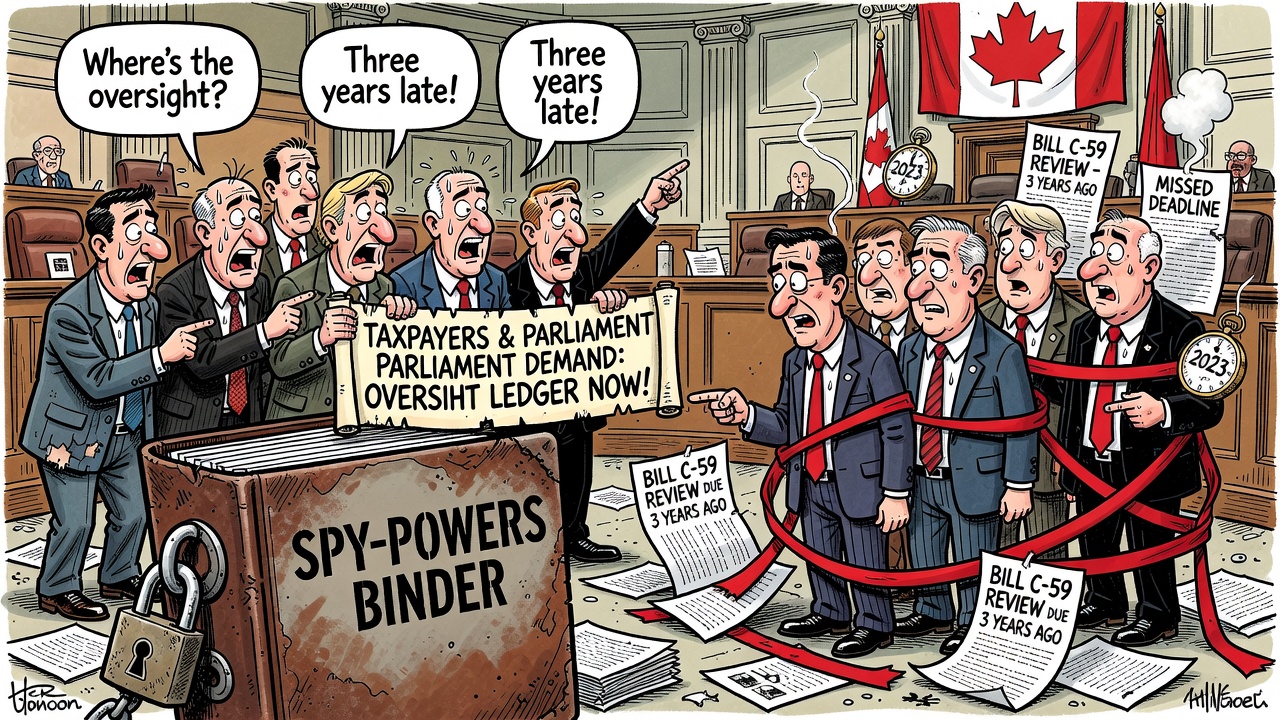
The Liberal government has a simple national-security problem: it demanded new powers, promised a review, and then let the review deadline pass.
Global News reported on August 13 that Ottawa is three years late reviewing the national-security framework created by Bill C-59, also known as the National Security Act, 2017. That law reshaped the Communications Security Establishment, changed how CSIS operates, affected the RCMP’s national-security work, and created broader civilian review architecture. In other words, this is not a housekeeping statute. It is the rulebook for some of the most intrusive powers the federal government can exercise.
The law itself is not vague. Section 168 says a comprehensive review of the Act’s provisions and operation must be undertaken during the fourth year after the section came into force. The Library of Parliament’s summary likewise described a parliamentary review mechanism for Bill C-59 after five years, ideally coordinated with review of the National Security and Intelligence Committee of Parliamentarians Act. The point was obvious: if Parliament gives security agencies modern tools, Parliament must come back and test whether those tools are lawful, effective and properly checked.
That did not happen on time. According to Global, documents show the chair of the National Security and Intelligence Review Agency raised the missed deadline with Public Safety Minister Gary Anandasangaree in a November 2025 meeting. The minister’s office later said parliamentary reviews are ultimately timed through parliamentary processes. That may be procedurally true, but it is politically thin. The Liberals have held government through the entire missed-deadline period. Passing the buck to “Parliament” is not an accountability plan.
Conservatives should not argue that Canada needs weak security agencies. The country faces real foreign-interference, cyber, espionage and terrorism threats. But strong national security and strong oversight are not opposites. They are partners. NSIRA says its job is to review national-security and intelligence activities across federal departments and agencies and inform Parliament and Canadians about whether government actions are lawful, reasonable and necessary. A missed statutory review makes that work harder, not easier.
The receipt test is straightforward. Publish the committee timetable. Name the minister responsible for coordinating the government response. Release a review scope covering CSIS, CSE, the RCMP, privacy impacts, artificial intelligence, lawful access, foreign interference, data-sharing and the relationship between agencies and oversight bodies. Table NSIRA’s warning correspondence with only genuine security redactions. Set deadlines for public hearings, classified briefings and final recommendations.
If the powers are working, the review can prove it. If the safeguards are outdated, the review can fix them. What Canadians cannot accept is a government that writes oversight into law, misses the deadline by years, and then asks the public to trust the same system it failed to review.
- Global News: Liberals blow past deadline to review major national security law
- Department of Justice: National Security Act, 2017, section 168
- Library of Parliament: Legislative Summary of Bill C-59
- NSIRA: Definition of an NSIRA review
This article argues for a statutory national-security review and public oversight timetable. It does not allege that security agencies acted unlawfully or that any specific investigation was improper.