Diplomacy Cannot Outrun RCMP Duty-to-Warn Letters
If Ottawa says India-related risks are under control, Canadians deserve the public safety receipts.
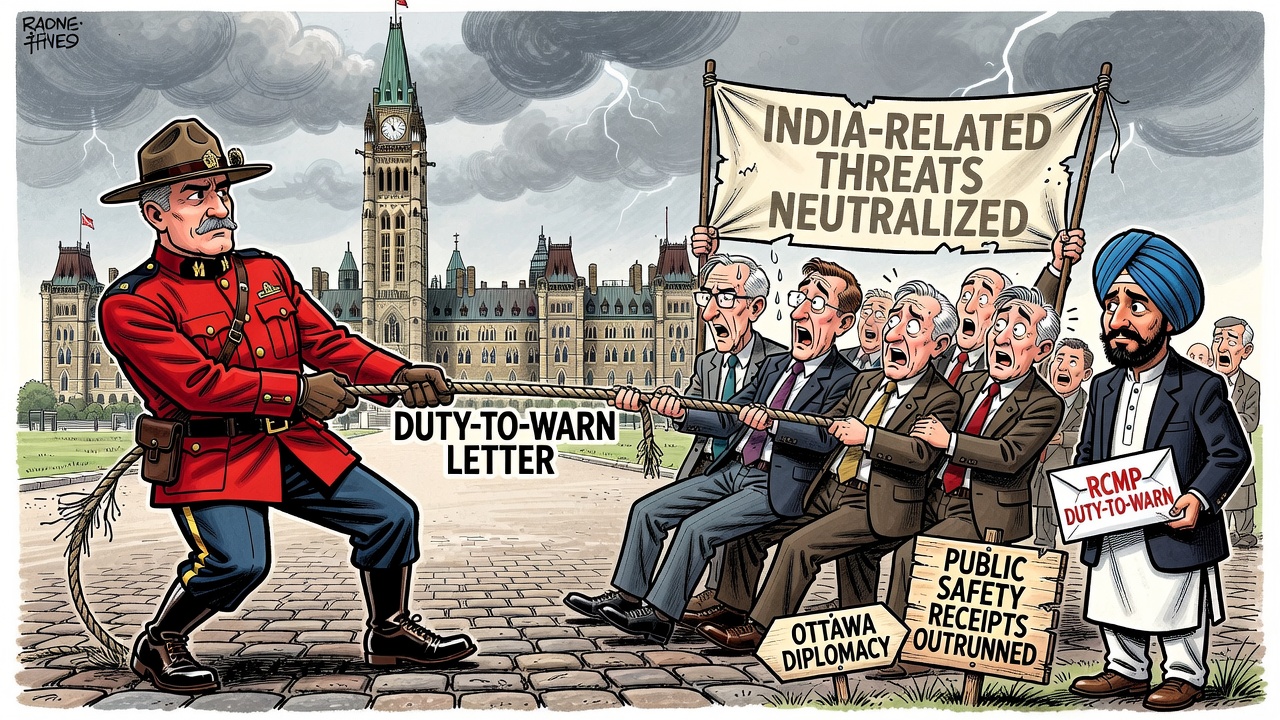
An RCMP duty-to-warn letter should carry more weight in Ottawa than any diplomatic talking point. CBC reported Tuesday that Sikh Canadian activist Inderjeet Singh Gosal — who succeeded Hardeep Singh Nijjar as leader of the Khalistani referendum campaign in Canada — received another RCMP warning after police contacted him in Caledon, Ontario. CBC said it saw the letter and reported that Gosal described it as his sixth official police warning.
That does not prove every allegation being argued publicly. India denies involvement in acts of violence in Canada, including the killing of Nijjar. Police warnings also avoid operational details for obvious reasons. But a duty-to-warn notice exists for a reason: police believe a threat is credible enough that the target must be told. When the same activist says warnings keep coming, the political question is no longer whether Ottawa can find warmer words for New Delhi. It is whether the Carney government can prove Canadian citizens are safer.
The RCMP’s own public record makes the stakes plain. In October 2024, the force said it had uncovered violent criminal activity in Canada with connections to agents of the Government of India. That was an extraordinary statement from federal police, not a partisan press release. Since then, Ottawa has had every incentive to stabilize relations with India for trade, migration, consular and geopolitical reasons. Conservatives can understand the national-interest case for diplomacy. What they should not accept is diplomacy without a measurable safety ledger.
Here is the receipt test. Public Safety Canada, Global Affairs, the RCMP and the Privy Council Office should publish a non-operational transnational-repression dashboard: the number of recent duty-to-warn notices linked to India-risk files, the ministerial briefing dates, the number of diaspora-safety meetings held, what protection options were offered, what assurances India has provided, and what standard must be met before Ottawa declares the relationship normalized.
None of that requires disclosing sources, surveillance methods or the names of protected people. Aggregate numbers and redacted timelines are exactly how a serious government balances national security with public accountability. If Ottawa can brief Canadians on trade opportunities, it can also brief them on whether intimidation, coercion and violent-threat files are rising or falling.
The worst answer would be a familiar Liberal reflex: ask Canadians to trust quiet process while the affected community receives warning letters one by one. Trust is not a security strategy. It is earned by results, transparency and consequences.
Canada should pursue constructive relations with India where Canadian interests align. But no prime minister should be allowed to turn the page on a foreign-interference file while the RCMP is still writing duty-to-warn letters. Before Ottawa sells normalization as success, publish the safety receipts.
- CBC News: Sikh activist says RCMP warned him again about threat linked to India file
- RCMP: Statement on violent criminal activity occurring in Canada with connections to agents of the Government of India
This article argues for aggregate public accountability. It does not ask police to disclose operational intelligence, sources, methods or personal security details.