The 65-File Immigration Fraud Case Needs a Public Control Ledger
A CBSA case involving alleged visa and asylum fraud across 65 files should trigger a public control ledger: affected cases, entry reviews, passport checks and enforcement timelines.
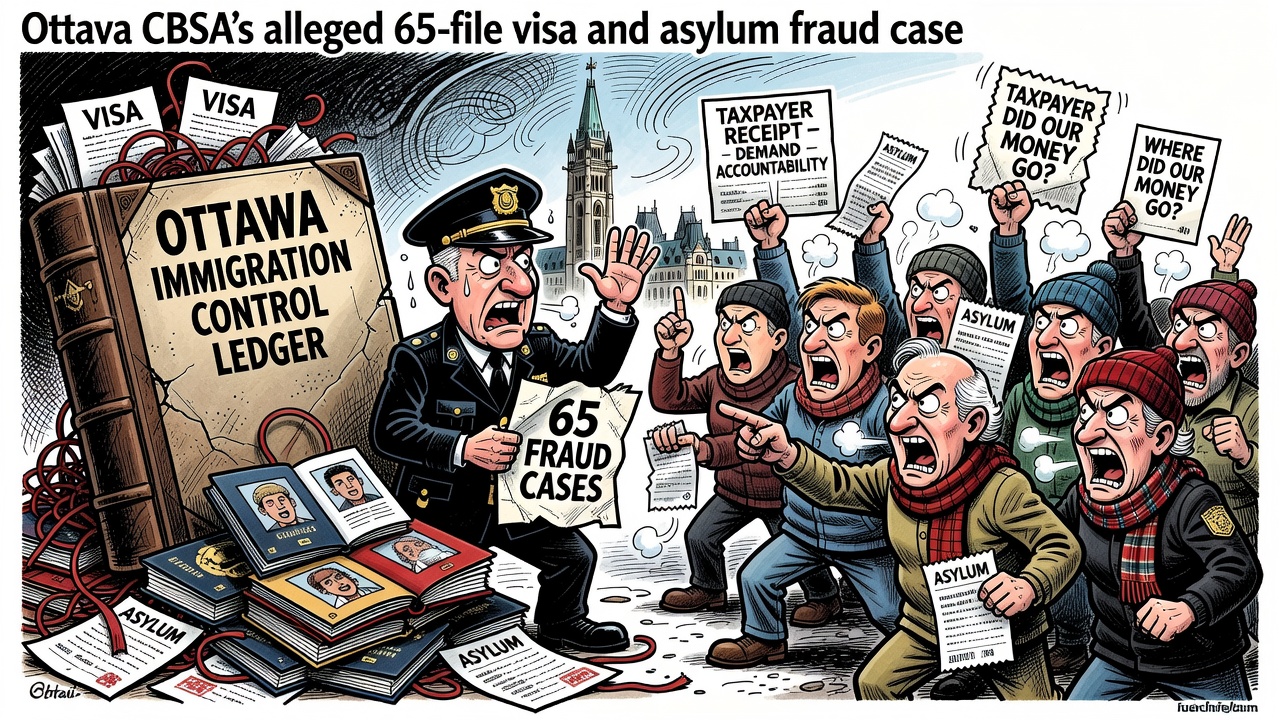
The latest immigration-fraud allegation out of Montreal should not be treated as a one-off headline. It should be treated as a systems test for a federal government that keeps telling Canadians it has restored control over immigration.
On August 21, the Canada Border Services Agency announced five charges against Abul Kasim, a 42-year-old Montreal resident, in connection with an alleged scheme to facilitate illegal entries into Canada. The allegations are unproven in court. That legal caution matters. But so does the public-policy question behind the case: how could an alleged document-and-application scheme touch dozens of immigration files before charges were announced?
According to CBSA, the investigation began in 2024 after information from Immigration, Refugees and Citizenship Canada. The agency says a May 8, 2025 search produced evidence that, between January 13, 2022 and March 19, 2024, the accused helped 65 people provide false information in temporary resident visa applications and asylum claims. CBSA also alleges he arranged entry into Canada for 53 people using fraudulently obtained temporary resident visas and used four falsified Canadian passports to impersonate hosts in invitation letters.
That is not merely an enforcement story. It is a control story. If Ottawa’s screening system was strong, Canadians should be able to see where it worked: which red flags triggered IRCC, how quickly the file moved to CBSA, whether suspect visas were cancelled, whether asylum files were reviewed, and how many implicated people remain in Canada. If the system failed, the public deserves to know that too.
The timeline raises another obvious accountability question. Proceedings began at the Montreal Courthouse on July 28, 2026, but CBSA says the accused allegedly left Canada in June 2025, is believed to be abroad, and is now subject to an arrest warrant because he could not be served. A government serious about border integrity should be able to explain, without compromising prosecution, what departure alerts, travel-document controls, consultant-monitoring tools and service procedures existed before the file reached court.
This is where conservative accountability is different from panic. The answer is not to smear every newcomer or prejudge a defendant. The answer is to demand receipts from the institutions that issue visas, process asylum claims, verify invitation letters and enforce immigration law. CBSA says it opened 161 criminal investigations into suspected Immigration and Refugee Protection Act offences between April 1, 2025 and March 31, 2026. That number should come with outcomes, timelines and lessons learned.
Ottawa should publish a public immigration-fraud control ledger: the number of affected files, how many visas were reviewed or revoked, how many asylum claims were re-screened, whether any individuals were removed, how passport-host verification is being hardened, what consultant or facilitator networks are under review, and why an accused person could be outside Canada before service.
If the Carney government really has taken back control, it should prove it case by case, file by file, and receipt by receipt.
- Canada Border Services Agency: CBSA investigation leads to charges against an individual who facilitated illegal entries into Canada
- Global News: Arrest warrant issued for Quebec man accused in visa fraud scheme
- TVA Nouvelles: Des dizaines d’immigrants seraient entrés illégalement au pays grâce à lui
Charges are allegations and have not been proven in court. This article argues for public system controls and aggregate outcomes, not prejudgment of any accused person or implicated claimant.