The Two Billion Trees Promise Became a $488M Accountability Ledger
Ottawa promised a simple result: two billion additional trees. Taxpayers now deserve the spending, delivery and survival receipts.
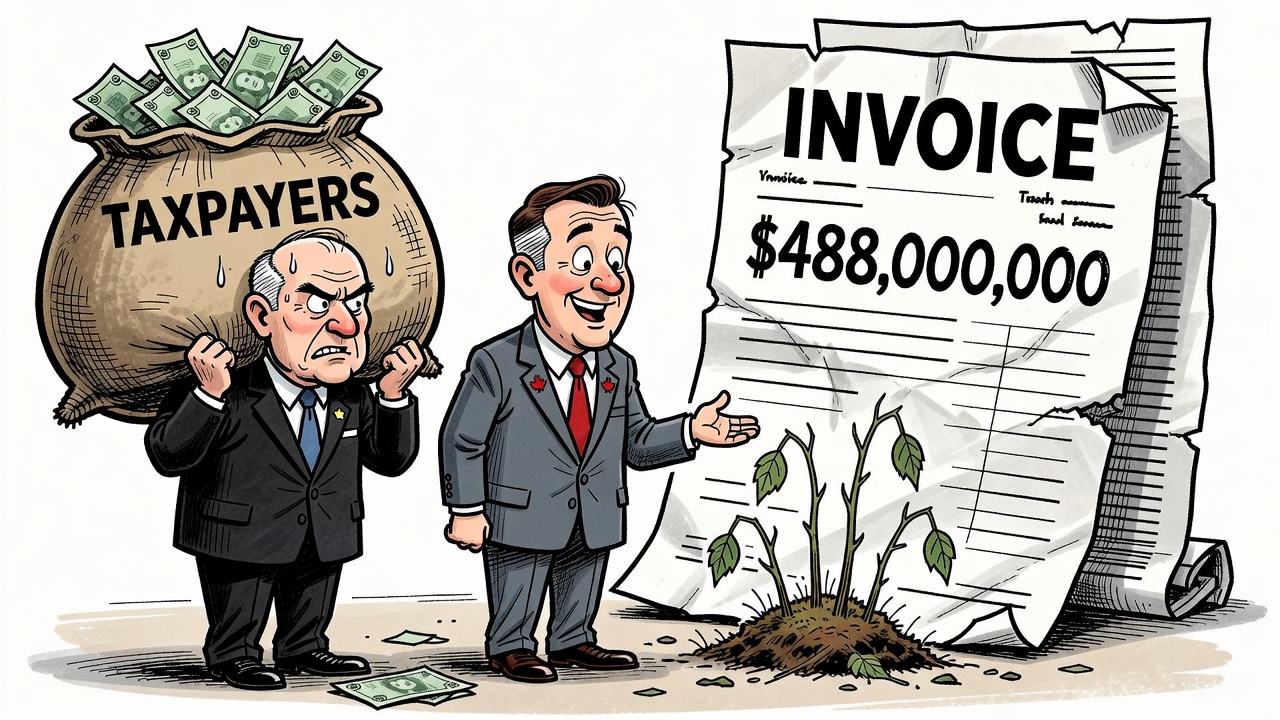
The Liberal Two Billion Trees promise was designed to be easy to understand. Plant two billion additional trees, help the climate, and let Canadians see an obvious result for a large public investment. Instead, it has become another Ottawa ledger where the headline promise is clearer than the receipts.
Blacklock’s Reporter and Rebel News report that federal spending on the now-disbanded program reached $487,891,090 for 228 million trees. That works out to roughly $2.14 for every tree Ottawa says was planted. The same reporting says $44.6 million went to administration, including salaries and benefits for 50 employees assigned to oversee the program.
Put aside the partisan spin and the accountability problem remains. Natural Resources Canada’s own 2024-25 results report said the department had supported the planting of more than 150 million trees since 2021, with agreements in place or in progress for 988 million over 10 years. The Environment Commissioner had already warned Parliament in 2023 that, based on early results, the program was unlikely to meet its objectives unless significant changes were made.
That warning matters because this was never supposed to be a press-release exercise. The 2019 Liberal election pledge was for two billion additional trees. Additionality is the key word. Canada already has a massive forestry sector where replanting after harvest is routine and, in many cases, required. If a federal program simply counts trees that would have been planted anyway, taxpayers are not buying new climate benefits; they are buying accounting.
Conservatives should not mock tree planting. Reforestation, wildfire recovery, urban canopy projects and Indigenous-led conservation can all be worthwhile when they are targeted, measurable and honestly reported. The issue is whether Ottawa can connect spending to delivered results: how many seedlings were actually planted, where they were planted, who was paid, how many survived, whether projects were additional, and how much money was spent on administration instead of ground-level work.
The public ledger should be simple. Publish every agreement, recipient, region, species mix, planned planting date, verified planting date, survival audit, administrative cost and per-tree all-in cost. Separate planted trees from scheduled trees. Separate federal additions from ordinary industry reforestation. Separate climate claims from photo-op claims.
If the program delivered durable public value, those receipts will defend it. If it delivered a fraction of the promised trees at nearly half a billion dollars before being wound down, Canadians deserve to know why the warning signs were ignored and who signed off on the spending.
- Rebel News: Taxpayers paid $2.14 per tree under failed Liberal planting program
- Blacklock’s Reporter: Paid $488M For 228M Trees
- Office of the Auditor General of Canada: 2023 Report 1 — Forests and Climate Change
- Natural Resources Canada: 2024-25 Departmental Results Report
This article relies on public reporting, federal departmental results and a federal watchdog report. It argues for disclosure and value-for-money controls; it does not allege unlawful conduct by any recipient, public servant or elected official.