Taken Back Control? Then Publish the Temporary-Resident Exit Ledger
Ottawa’s temporary-resident target is only credible if Canadians can see who arrived, who renewed, who left and who remains unresolved.
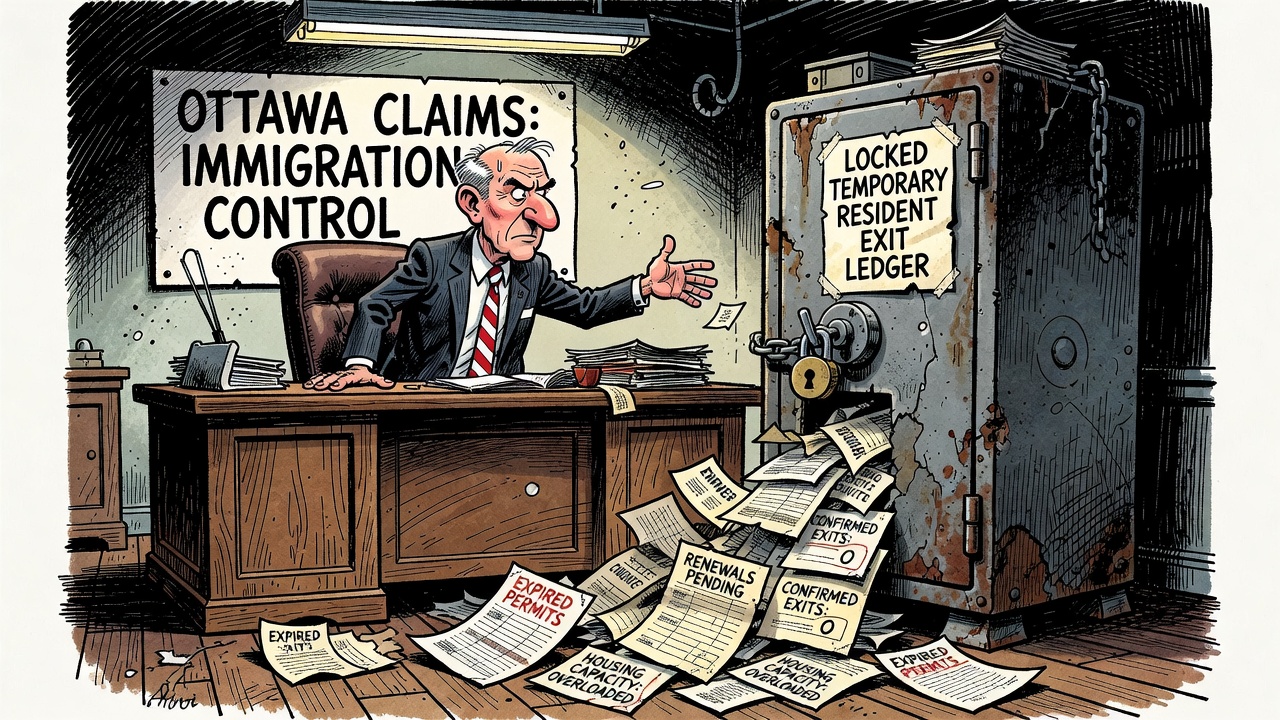
Prime Minister Mark Carney says Ottawa has “taken back control” of temporary immigration. If that is true, the government should have no problem publishing the control ledger.
The latest Canadian Press report should make taxpayers skeptical of slogans. Parisa Mahboubi, chair of the C.D. Howe Institute’s Immigration Targets Council, says Canada needs further temporary-resident reductions and better data on when people actually leave. Her warning is blunt: Canada is “flying in the dark” on renewals, expired student and work permits, and whether people without status have exited the country.
That is not an anti-immigrant point. It is a basic management point. A serious country cannot run housing, health care, classrooms, transit and labour-market planning on assumptions. If Ottawa admits temporary residents, renews permits, transitions some people to permanent residence and expects others to leave, Canadians need to see the in-flows and out-flows in one public table.
The numbers are large enough that approximation is not good enough. The Canadian Press reported that, as of June 30, immigration data showed 632,000 study-permit holders and 1.5 million temporary work-permit holders in Canada. It also reported sharp drops in new arrivals: 22,410 new foreign students between January and June 2026, compared with 124,930 in the same period in 2024, and 98,130 new temporary worker arrivals, compared with 244,985 two years earlier.
Those reductions matter. The government’s own March 2026 briefing says temporary-resident arrival targets were cut from 673,650 in 2025 to 385,000 in 2026 and 370,000 in 2027 and 2028. It says the goal is to reduce non-permanent residents below five per cent of Canada’s population by the end of 2027. It also admits the methodology depends on exit rates, permit-expiry behaviour, permanent-residence transitions, renewal rates and approval rates.
There is the accountability gap. Ottawa is telling Canadians the target is achievable while the experts are asking whether the exit side of the books is reliable. A target without verified exits is a hope, not a plan. A housing-capacity promise without real-time population accounting is another press conference, not governance.
A conservative accountability standard would be simple: publish a monthly temporary-resident ledger. It should show new study permits, new work permits, renewals, permit expiries, confirmed exits, estimated unresolved expired-status cases, permanent-residence transitions, asylum-claim impacts, removals where applicable, and the housing and service-capacity assumptions attached to the plan. Break it down nationally and by province. Show revisions when the data changes.
Carney inherited a system his own side now admits lost control of. He wants credit for restoring order. Fine. But order is not a talking point. It is a verifiable record. Until Ottawa publishes the exit ledger, Canadians are being asked to trust a black box that helped create the crisis in the first place.
- Medicine Hat News / The Canadian Press: Immigration board asks feds to better track temporary residents
- Immigration, Refugees and Citizenship Canada: CIMM — Temporary Resident Targets — March 23, 2026
- Parliamentary Budget Officer: Demographic Implications of the 2026-2028 Immigration Levels Plan
This article argues for public immigration-performance disclosure. It does not allege unlawful conduct by any newcomer, public servant or elected official.