Carney’s Access-Law Rewrite Needs a Red-Line Ledger
If the Carney government is preparing access-to-information changes for December or January, it should publish the democratic guardrails before departments get new tools to delay or narrow disclosure.
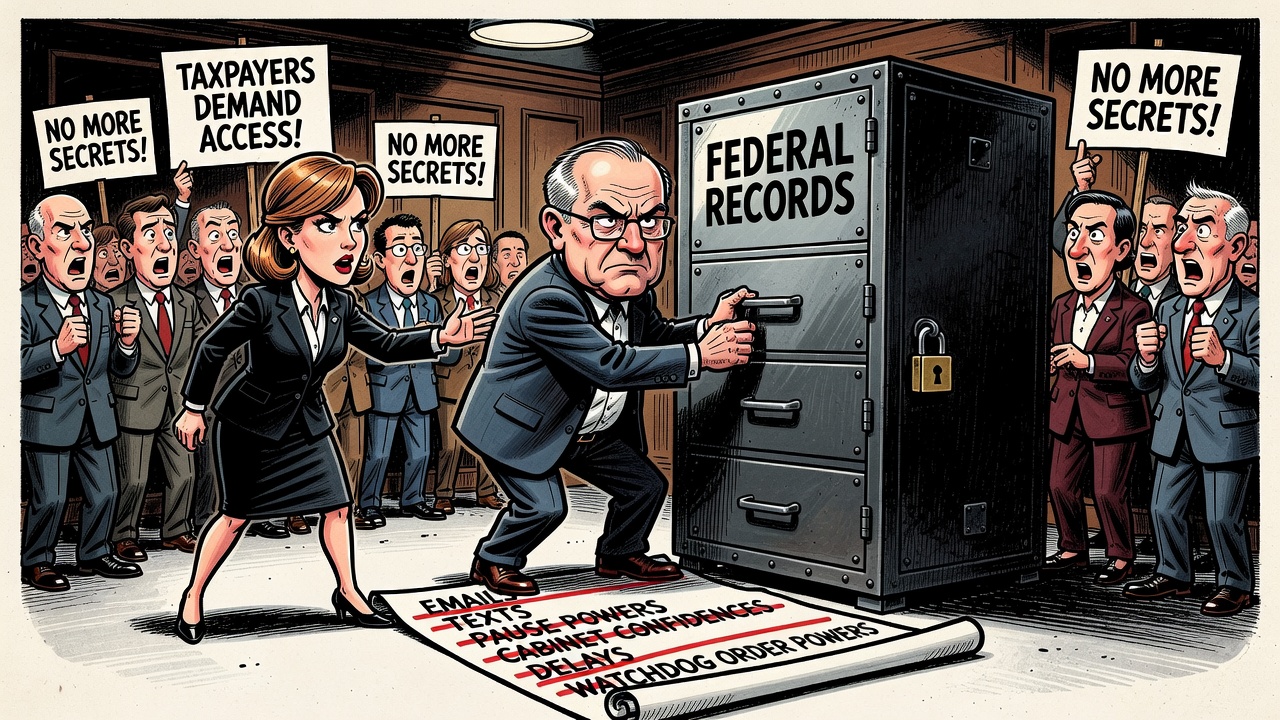
The next federal transparency fight may arrive before Canadians have even seen the bill. The Wire Report reported that Information Commissioner Caroline Maynard has been told Ottawa could move on access-to-information changes in December 2026 or January 2027, while the scope remains unclear. That uncertainty is the problem. A government that controls the documents should not get to quietly rewrite the rules for obtaining them.
The March review paper already raised the right alarms. It floated allowing institutions to place requests on hold and discussed excluding “transitory records” such as emails and texts from the Access to Information Act. In 2026, that is not a technical housekeeping matter. Ministers, political staff and departments do business through email, messaging apps, draft notes, briefing trails and calendar records. If those channels fall outside effective access rules, Canadians are left with press releases instead of evidence.
Maynard’s office has been blunt about the direction reform should take. Her March statement warned that several proposals appeared aimed at easing institutional workload rather than strengthening the public’s right to know. In February committee evidence, she told MPs the review must expand access, modernize the framework and reinforce independent oversight, not become cover for further secrecy. That is the test Carney should accept publicly.
The status quo is not healthy either. The commissioner’s 2025-26 annual-report materials say more than 20 percent of 2024-25 access requests missed legislated timelines; excluding Immigration, Refugees and Citizenship Canada, the late-response rate was 35 percent. Delays turn a right into a waiting game. But the answer to missed deadlines cannot be giving institutions more excuses to pause files, redefine records or bury politically inconvenient material behind broader exclusions.
There is a conservative accountability principle here: taxpayers pay for the records, so taxpayers deserve enforceable access to them. Cabinet confidentiality has a legitimate role. National security and privacy exemptions have a legitimate role. But those protections should be specific, reviewable and narrow. They should not become a black box where spending decisions, procurement warnings, ethics advice and policy tradeoffs disappear.
Before the government tables any rewrite, publish the red-line ledger. Are emails and texts covered or not? Who can pause a request, for how long, and on what evidence? Will cabinet-confidence claims face independent review? Will the commissioner’s order-making powers be protected? What emergency-delay powers are being considered? What timeline will departments face when they miss statutory deadlines?
Carney likes to talk about competent government. Competence is not secrecy with better branding. If Ottawa believes its access-law update strengthens democracy, it can prove it now by publishing the table Canadians can use to judge the bill before the loopholes are locked in.
- The Wire Report: Liberals set to update access-to-information law: watchdog
- Office of the Information Commissioner: Information Commissioner expresses reservations with Government’s initial step
- Office of the Information Commissioner: 2025-2026 Annual Report
- Office of the Information Commissioner: Key messages for OGGO appearance, February 5, 2026
- OpenParliament: Government Operations Committee, February 5, 2026
This article argues for stronger transparency safeguards before legislation or administrative access-to-information changes are finalized.