Carney’s Housing Promise Needs a Starts Ledger
The September housing-starts numbers are not a victory lap. They are a receipt check against Ottawa’s promise to build at the scale Canadians were sold.
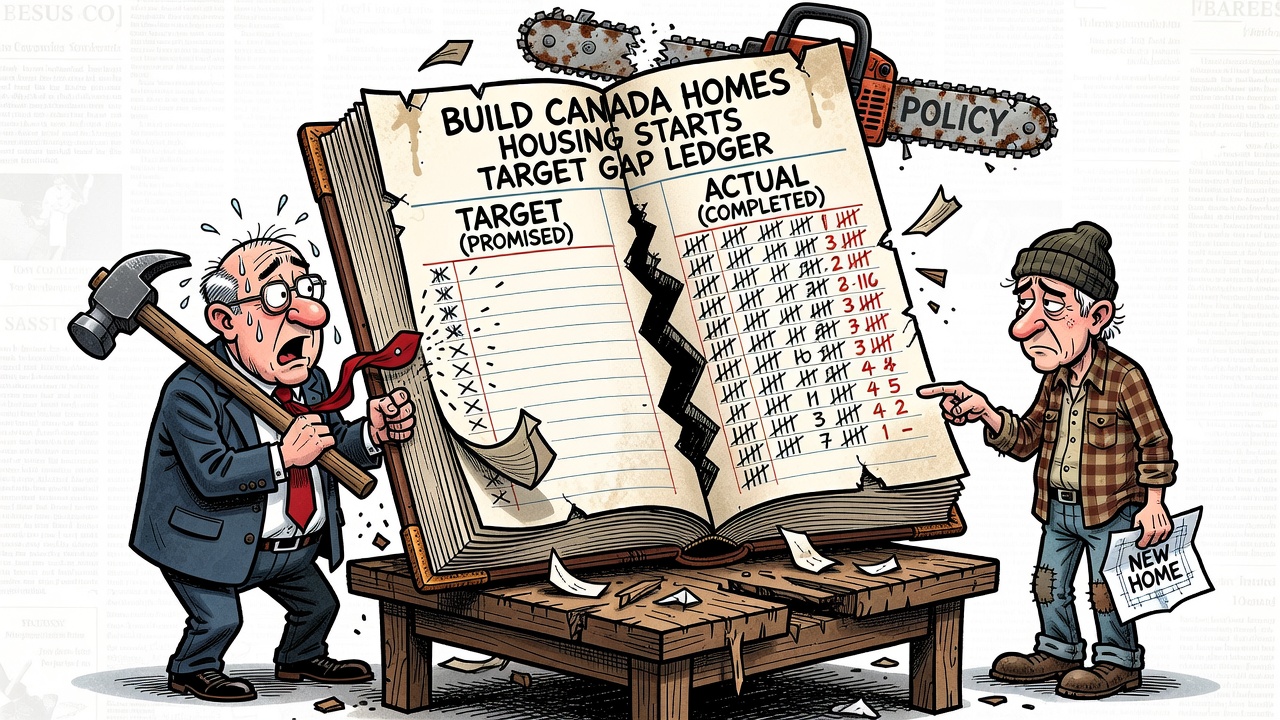
Canada does not need another housing slogan. It needs a starts ledger. September’s CMHC figures show housing starts rising 3 percent from August to a seasonally adjusted annual rate of 248,896 units, with the six-month trend at 250,411. That sounds encouraging until it is compared with the scale of the crisis and the political promise attached to it.
The more uncomfortable receipts are underneath the headline. Canadian Mortgage Trends reported that actual starts in centres of at least 10,000 residents were down 11 percent year over year in September, and starts through the first nine months of 2026 were 4 percent below the same period in 2025. Storeys reported the same year-over-year decline and noted 143,929 homes with approved permits but no construction started in centres of 50,000 or more. That is not a supply breakthrough. It is a warning light.
CMHC’s own affordability math raises the stakes. Its Fall 2026 Housing Supply Report says Canada needs roughly 417,000 to 469,000 homes per year to restore pre-pandemic affordability by 2036, leaving an annual supply gap of about 187,000 to 238,000 homes. In plain English: a quarter-million annualized pace is still far short of the build rate needed to make housing affordable again.
This is where the Carney government’s Build Canada Homes pitch must face measurement, not marketing. Canadian Affairs reported that experts remain concerned about vague goals and unclear key performance indicators. The Liberals promised 500,000 new homes a year during the election, while the Parliamentary Budget Officer estimated Build Canada Homes would add 26,000 homes over five years. Both numbers cannot be waved around as if they tell the same story.
A conservative accountability standard is simple: if Ottawa claims it can accelerate supply with taxpayers’ money, federal land and a new housing agency, it should publish the scoreboard. How many homes has Build Canada Homes directly started, financed and completed? How many are family-sized? How many are genuinely affordable under a disclosed income test? What is the cost per unit? Which lands are committed? Which projects are stuck at permits, financing or servicing?
There are legitimate reasons construction is hard: interest rates, labour constraints, municipal approvals, infrastructure capacity and pre-sale weakness. But those are arguments for clearer targets, not looser ones. If a government promises wartime-scale delivery, it should not be allowed to hide behind national averages when actual starts are falling year over year in major centres.
Carney’s housing test is not whether Ottawa can announce another program. It is whether families see enough homes built fast enough to change prices, rents and waiting lists. Until then, every monthly starts release should be treated as a public performance review. Publish the targets, publish the starts, publish the completions, publish the cost per door — and stop asking Canadians to confuse motion with delivery.
- Desjardins: Canada: September Housing Demand Eased While Supply Edged Up
- Canadian Mortgage Trends: Housing starts rise 3% in September, remain below last year’s pace
- Storeys: Canada’s Approved-But-Unstarted Homes Climb As Starts Slide
- CMHC: Fall 2026 Housing Supply Report
- Canadian Affairs: Build Canada Homes’ vague goals concern experts
This article argues for a public, project-level housing delivery ledger using published housing-starts data and documented concerns about Build Canada Homes targets.