If the Ocean Envoy Role Is Clean, Let the Committee Ask
The issue is not whether Diana Fox Carney is paid. It is whether Parliament is allowed to ask basic questions about an official envoy role sitting beside a $1.2 billion ocean-policy file.
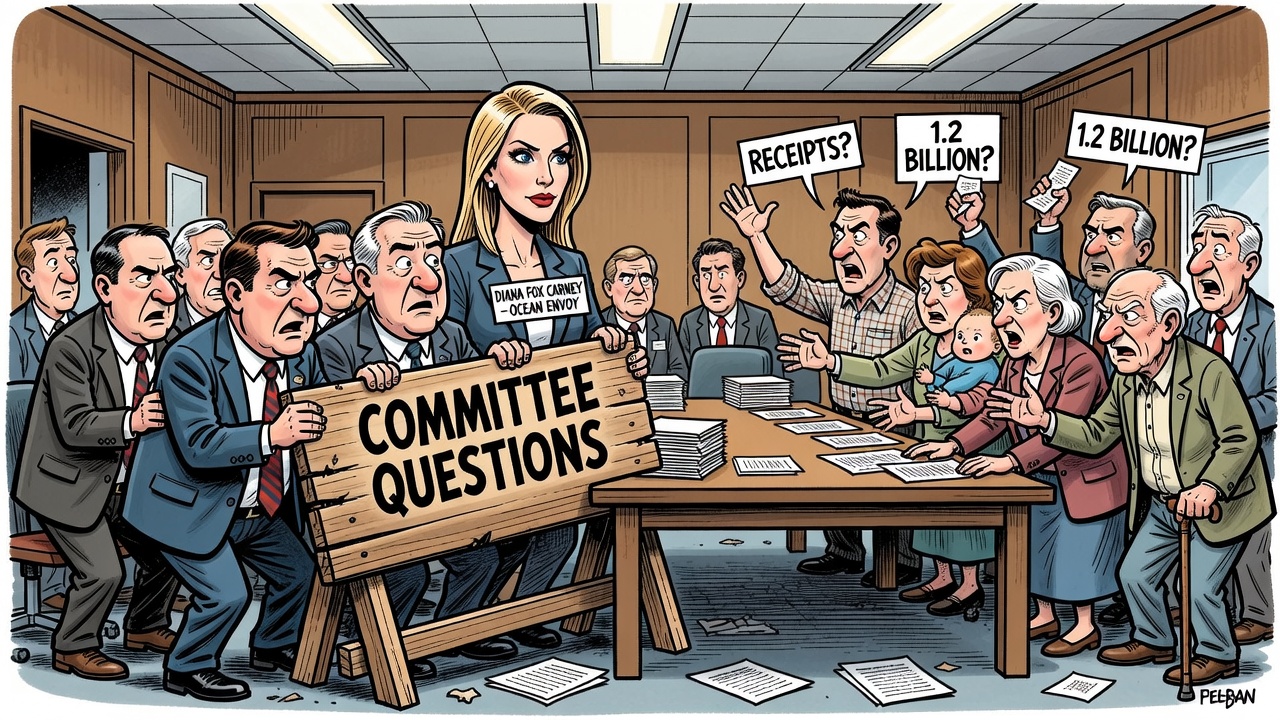
Ottawa keeps insisting the Ocean Envoy role is above board. Fine. Then let the committee ask.
Juno News reported Wednesday that Liberal MPs blocked debate on a motion to have Diana Fox Carney appear before the House fisheries and oceans committee to explain her Ocean Envoy role and its relationship to the federal ocean-protection agenda. The motion reportedly followed questions from Conservative MP John Brassard about why the prime minister’s spouse should not be asked to account publicly for a government-announced role connected to a major policy file.
The facts that can be checked are already enough to justify scrutiny. On September 16, Fisheries and Oceans Canada announced that Diana Fox Carney would serve as Canada’s Ocean Envoy and Chair of the 12th Our Ocean Conference. The government described the job as voluntary and non-remunerated. That distinction matters: nobody should suggest she personally receives the ocean-protection money. But “unpaid” is not the same as “unaccountable.”
Less than two weeks later, on September 29, the Prime Minister’s Office announced $1.2 billion in ocean-protection spending. The PMO’s own release identified the Our Ocean Conference as being chaired by Canada’s new Ocean Envoy, Diana Fox Carney. That creates an obvious public-interest question: what exactly are the envoy’s duties, what files does she touch, who briefs her, what meetings does she attend, what travel or staff support is provided, and what conflict rules apply when the Prime Minister’s spouse is attached to an international conference and ocean-policy agenda?
A conservative accountability standard is not complicated. Public roles require public guardrails. Family proximity to power requires more disclosure, not less. If the role is ceremonial, say so and publish the terms. If it involves outreach to governments, Indigenous leaders, industry, philanthropies or conference sponsors, publish the meeting logs and conflict screens. If the department is supporting the work, publish the budget authority, travel rules and staff assignments.
Committee testimony is the normal democratic pressure valve for precisely this kind of concern. Blocking questions does not protect public trust; it makes taxpayers wonder what cannot withstand daylight. The government’s best answer would be simple: release the appointment memo, ethics advice, role description, expense rules, recusals, meeting records and conference sponsor list, then let MPs ask their questions in public.
If the Ocean Envoy appointment is clean, transparency will prove it. If Liberals keep shielding it from scrutiny, Canadians will reasonably ask why an unpaid role needs such expensive-looking protection.
- Juno News: NO QUESTIONS: Liberals shield Carney’s wife from scrutiny over ocean envoy role
- Fisheries and Oceans Canada: Minister Thompson announces Ocean Envoy and Chair of Our Ocean Conference
- Prime Minister of Canada: Prime Minister Carney announces historic investment to protect Canada’s oceans
This article argues for parliamentary scrutiny and public disclosure. It does not allege unlawful conduct by Diana Fox Carney, Prime Minister Mark Carney, Fisheries and Oceans Canada, committee members or conference partners.