The Tiger Yuan Political-Access Ledger
When a Liberal donor and Canada-China “friendship” figure faces a CBSA admissibility case, Ottawa owes Canadians receipts — not a shrug.
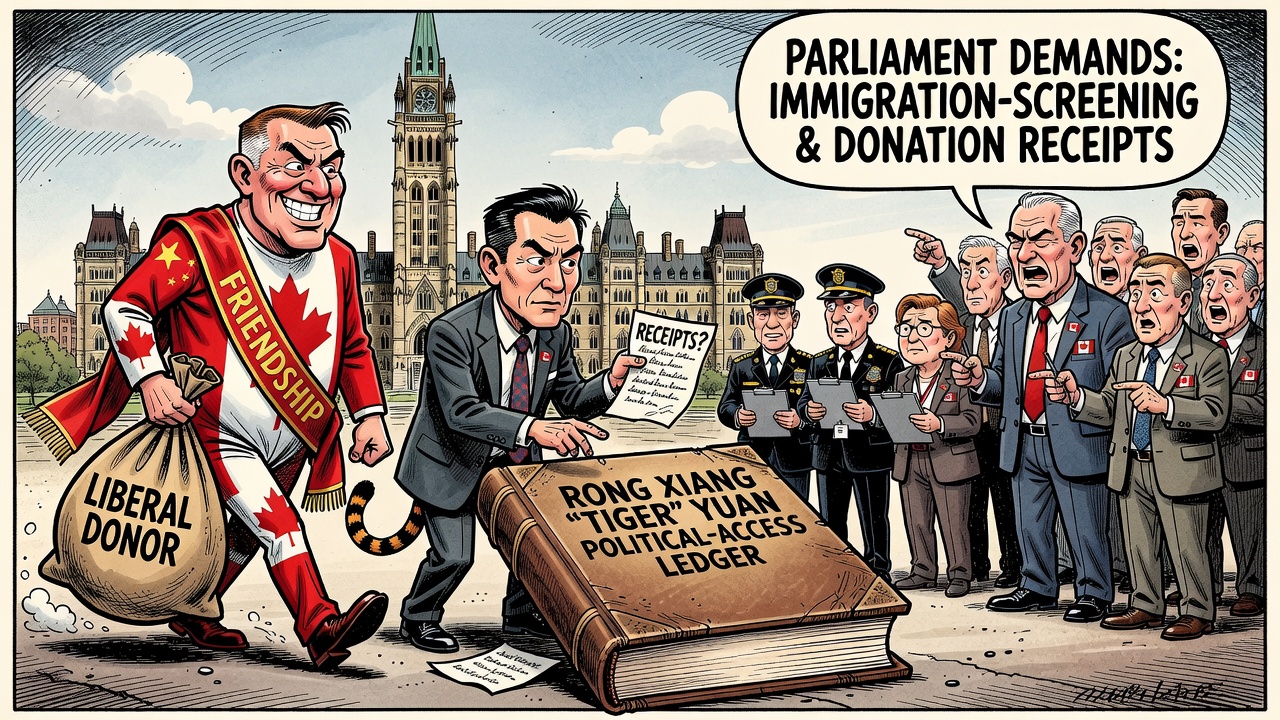
The Rong Xiang “Tiger” Yuan case should be handled with two principles at once: due process for the individual, and hard public accountability for the political system that let him get so close to power. Global News reports that CBSA has launched deportation proceedings against Yuan, a Chinese-born permanent resident and founder of the Canada-China Association for Promoting Friendly Relations. The Immigration and Refugee Board confirmed it received a CBSA referral for an admissibility hearing under Immigration and Refugee Protection Act paragraphs 35(1)(a) and 40(1)(a), with no hearing date scheduled as of the report.
Those are grave allegations, not verdicts. Yuan’s lawyer denies the claims, says Yuan denies war crimes “in the strongest terms,” and says he has never been charged with or convicted of such offences in China, Canada or elsewhere. That distinction matters. Conservatives should not demand trial-by-headline. We should demand that institutions do their jobs in daylight wherever national security, immigration screening and political access intersect.
The public-interest question is obvious: how did a non-citizen, later referred by CBSA for alleged war-crimes and misrepresentation concerns, become a political donor and familiar face around Liberal-linked events? Global News reports Yuan donated to Justin Trudeau’s Montreal riding association and to the Liberal Party, was photographed at Liberal and community events, and was connected to a group promoting closer Canada-China relations. His lawyer says the donations were lawful, that Yuan never had a private relationship or private meeting with a Canadian politician, and that he never sought to influence the democratic process beyond legal donations.
Fine. Then publish the ledger. Canadians do not need innuendo; they need records. Which federal riding associations and party entities received donations from Yuan, related company directors or Canada-China association figures? Were any contributions returned after concerns emerged? Which MPs, ministers, staffers or party officials attended events where Yuan or his association had a formal role? Were any briefings, cautions or foreign-interference screens circulated? And when Yuan obtained permanent residence in 2008, what military-service disclosure was required, checked and retained?
IRPA section 35 deals with inadmissibility for human or international rights violations, including acts outside Canada that would constitute war crimes or crimes against humanity. Section 40 covers misrepresentation. Those provisions exist because Canada has both a moral duty and a security duty not to become a safe haven for people who hide serious histories. If CBSA now believes the screening record failed, Parliament should know whether the failure was one file, one form, or a broader blind spot.
The Carney Liberals should not hide behind “the process is ongoing” to avoid every accountability question. Protect the hearing. Redact personal details where law requires. But publish the non-privileged political-access ledger: donations, event attendance, meetings, screening timeline, warning memos and corrective steps. The allegation belongs to the tribunal. The access problem belongs to Ottawa.
- Global News: Founder of Canada-China relations group, Liberal donor faces deportation for “war crimes”
- Global News video: Liberal donor faces deportation from Canada for “war crimes” in China
- Justice Laws Website: Immigration and Refugee Protection Act, section 35
- Justice Laws Website: Immigration and Refugee Protection Act, section 40
This article treats the CBSA/IRB case as an allegation and focuses on political access, immigration screening and public accountability. It does not assert that Yuan committed a crime.