Before Bill C-40 Moves DIA Into a Crown Corporation, Publish the Conflict Ledger
Faster defence buying is not a blank cheque for weaker public confidence. Move the agency if Parliament chooses — but publish the conflict ledger first.
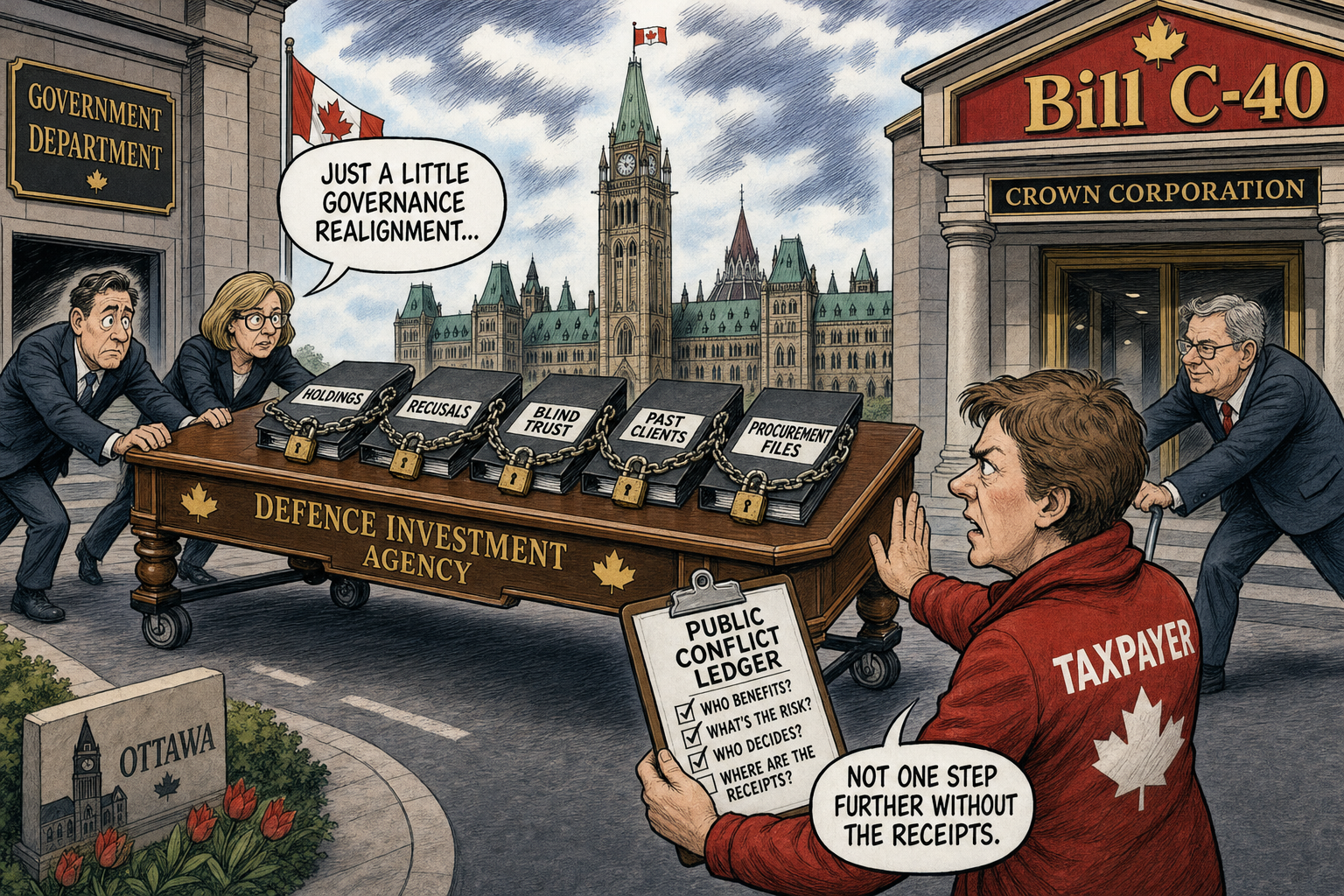
Bill C-40 raises the stakes for a question Ottawa still has not answered plainly enough: what exactly is the public conflict-control system around Defence Investment Agency CEO Doug Guzman?
The Canadian Press reported on October 6 that the Liberal government tabled legislation to turn the Defence Investment Agency into a Crown corporation, with its own board, more independence from government and a mandate to move faster. Parliament’s LEGISinfo summary says Part 1 would establish the Canadian Corporation for Defence Investment to carry out production, procurement and investment activities for national defence, while Part 2 would expand defence-production and procurement authorities, including new financial authorities.
That may be defensible if it fixes Canada’s slow, broken military purchasing system. Conservatives should want soldiers properly equipped and taxpayers protected from delay, duplication and excuses. But a faster Crown corporation cannot be built on “trust us” ethics administration.
Blacklock’s Reporter’s public archive says Guzman, appointed to oversee defence contracting, owns shares in dozens of publicly traded firms, including federally regulated companies, according to ethics filings. The full article is members-only, so the responsible standard is not to embellish it. The responsible standard is to ask Ottawa to publish the redacted receipts that settle the issue.
The parliamentary record already shows why that is necessary. At Government Operations, Guzman confirmed RBC-related deferred compensation and stock options had been disclosed and would be part of the blind-trust process. He also said he had sold some assets that did not fit the blind-trust structure. At National Defence, MPs pressed him on past defence-company clients, holdings in financial, energy and mining sectors, critical-minerals implications and whether an RBC-only screen was enough for public confidence. Guzman said he was compliant with the rules and that the Ethics Commissioner had identified one required screen for RBC, with no screen required for the rest.
Compliance matters. It is not the same thing as confidence when Ottawa is shifting billions in procurement and investment authority into a more independent vehicle. The public does not need every private dollar exposed. It does need to know which entities are screened, which files trigger recusal, who enforces the screen, when the blind trust was operational, what past-client safeguards exist and whether any procurement or investment file was touched before the protections were complete.
Bill C-40 should not move faster than the integrity architecture around it. Before Parliament gives the Defence Investment Agency more independence, the Carney government should publish a redacted conflict ledger: holdings categories, screened entities, recusal triggers, blind-trust timeline, past-client safeguards, files touched, board oversight rules and quarterly compliance reporting.
If everything is clean, the ledger protects Guzman, the agency and the government. If the ledger cannot be published even in redacted form, Parliament should ask why this Crown corporation needs more independence before Canadians get more accountability.
- Blacklock’s Reporter archive: Holds Fed-Regulated Shares archive item
- Canadian Press / CityNews: Liberals table bill to make Defence Investment Agency a Crown corporation
- Parliament of Canada LEGISinfo: Bill C-40, Strengthening Canada’s Defence Sector Act
- House of Commons OGGO evidence: Government Operations committee questioning
- House of Commons NDDN evidence: National Defence committee evidence
- House of Commons Hansard: October 20, 2026 Bill C-40 debate record
Blacklock’s full article is members-only; this post relies on the public archive summary, mainstream reporting and primary parliamentary records for verifiable context.